For most Perth homeowners, the first big question when planning a pool barrier isn’t about gates or post spacing. It’s a simple fork in the road: glass or aluminium? Both options sit within the broader scope of professional pool fencing, and both can deliver a safe, compliant and good-looking result. The difference comes down to how each material suits your home, your view and the way you want to live around your pool.
This article compares the two head to head through a lens that matters here: Perth’s salt air, intense UV and sandy soils. Rather than listing generic pros and cons, we’ll help you match material to property type, aesthetic goals and how much upkeep you’re realistically willing to do.
Prefer to watch or listen?
Listen onApple Podcasts
How Perth’s Climate Shapes Fence Performance
Perth sits in a unique environment. Long, hot summers mean fencing materials cop relentless UV exposure for months on end. Anything that fades, chalks or degrades under sunlight will show wear faster here than in cooler states.
Then there’s the salt. Suburbs from Scarborough to Fremantle and right down the coast deal with airborne salt that settles on every outdoor surface. Salt accelerates corrosion on metals and leaves a hazy film on glass, so corrosion resistance and cleanability both matter.
Sandy, free-draining soils are the third factor. They affect how footings are set and how stable posts remain over time. Both glass and aluminium fences rely on properly engineered footings, but loose sandy ground makes correct installation depth and fixing especially important for long-term stability.
Glass Pool Fencing Explained
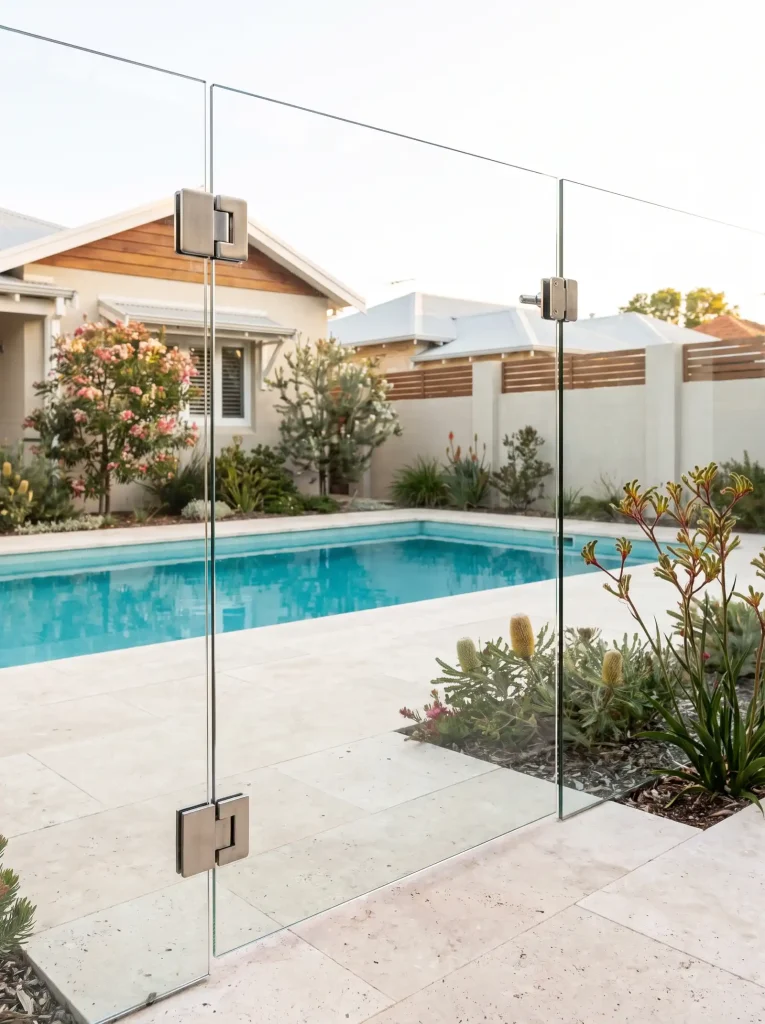
Glass pool fencing comes in two main styles. Frameless glass uses thick toughened panels held by discreet spigots at the base, with no top rail and no visible vertical posts between panels. The result is an almost invisible barrier and an uninterrupted view of the pool and beyond.
Semi-frameless glass sits between frameless and traditional fencing. It uses slim posts at panel joins while still keeping most of the see-through effect. It’s often a practical middle ground for homeowners who want the modern glass look with a little more structure.
The appeal of glass is obvious. It creates a sleek, contemporary finish, makes small courtyards feel larger, and lets you keep an eye on swimmers from the house. Toughened glass also stands up well to salt and UV, since it doesn’t corrode or fade. The trade-off is visible smudging and water spotting, which means more frequent cleaning to keep that flawless look.
Aluminium Tubular Fencing Explained
Aluminium tubular fencing is the classic vertical-bar pool fence many Perth homes already use. The frame is made from aluminium tubing finished with a powder coating, which bonds a durable colour layer to the metal.
The big advantage in our climate is corrosion resistance. Aluminium doesn’t rust like steel, and quality powder coating adds a protective barrier against salt and UV. That combination makes it well suited to coastal and near-coastal properties where metal fencing takes a beating.
Maintenance is minimal. An occasional rinse to remove salt and dust usually keeps it looking fresh, and any spotting is far less noticeable than on glass. The trade-off is appearance: tubular aluminium provides a more traditional, framed look rather than the open, frameless feel of glass.
Side by Side: Appearance, Durability and Upkeep
On appearance, glass wins for openness and a modern edge, while aluminium offers a structured, classic look that blends with many home styles. Neither is objectively better; it depends on the feel you want.
On durability in Perth conditions, both perform strongly when installed correctly. Toughened glass resists corrosion and fading entirely, while quality powder-coated aluminium resists salt and UV very well over many years.
On maintenance, aluminium is the lower-effort choice. It hides spotting and needs only periodic rinsing. Glass demands more regular cleaning to stay crystal clear, especially close to the coast where salt film builds quickly.
On suitability by property type, glass tends to suit modern homes, entertaining areas and properties with a view worth preserving. Aluminium often suits family backyards, sloping or larger blocks, and owners who prioritise practicality over a frameless aesthetic.
Matching the Material to Your Home
Start with your pool layout and outlook. If your pool sits in a prime spot with ocean, garden or city views, frameless glass protects that outlook. If the fence is more functional and tucked to one side, aluminium may make more sense.
Think about your outdoor lifestyle too. Households that entertain heavily and want a seamless indoor-outdoor flow often lean glass. Busy families who want a robust, fuss-free barrier around an active backyard frequently choose aluminium.
Finally, be honest about upkeep. If wiping down glass every week or two doesn’t appeal, aluminium’s low-maintenance nature will serve you better over the long run. Many Perth homeowners actually combine both, using glass where the view counts and aluminium along less visible boundaries.
Compliance and Safety in Western Australia
Both glass and aluminium can fully meet Western Australian pool barrier requirements when properly designed and installed. The material itself isn’t what makes a fence compliant; correct height, gap spacing, gate function and the non-climbable zone all matter, regardless of whether you choose glass or metal.
What’s important is that the fence is installed to current standards by someone who understands WA’s rules. A well-built glass fence and a well-built aluminium fence are equally capable of keeping young children safe and passing inspection.
So the choice between glass and aluminium is really about looks, lifestyle and maintenance, not safety. Once you’ve settled on a material, the next natural question is budget. Our upcoming guide, How Much Does Pool Fencing Cost in Perth? A Complete Buyer’s Guide, walks you through exactly what to expect.