Before you commit to a pool fence, it’s fair to ask how long it will actually last. Fencing is a real investment, and most people want to understand the realistic timeline before wear, corrosion or fatigue force a replacement. The truth is that lifespan varies widely, and it comes down to two things above all: the material you choose and how well it was installed. Talking it through with experienced pool fencing contractors upfront helps you understand what really drives durability rather than relying on optimistic assumptions.
This article focuses squarely on lifespan and wear. If you’re weighing up which look suits your property, our guide to pool fencing styles for modern Perth homes covers that side of things. Here, the goal is to give you a realistic picture of how long a fence endures and what shortens its life.
Prefer to watch or listen?
Listen onApple Podcasts
How Perth’s Climate Stresses a Pool Fence
Perth is one of the tougher environments in Australia for outdoor fixtures. Several forces work on a pool fence every day, and their combined effect is what determines how quickly it ages.
- Salt air: Homes near the coast are exposed to airborne salt, which settles on metal surfaces and accelerates corrosion, particularly at joints, fixings and any exposed edges.
- UV intensity: Perth records some of the highest UV levels in the country. Prolonged exposure degrades coatings, fades finishes and can stress seals and fittings over time.
- Temperature swings: Hot days and cooler nights cause materials to expand and contract repeatedly. Over years, this cycling loosens fixings and stresses fixed connections.
- Sandy soils: Much of the Perth basin sits on sandy ground that shifts and drains quickly. Poorly bedded footings can move, which unsettles posts and panels.
No fence escapes these pressures entirely. The difference between a fence that lasts and one that fails early is largely in how it’s built to cope with them.
Expected Lifespan of Glass Pool Fencing
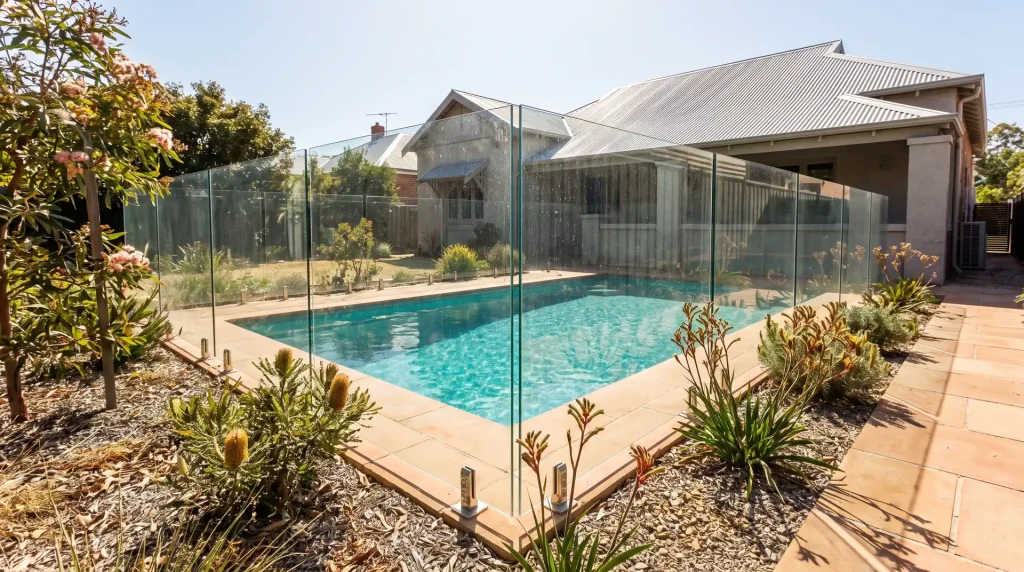
Toughened glass panels themselves are extremely durable. The glass does not corrode, fade or degrade under UV, and it can perform well for decades in Perth conditions. Where glass fencing ages is not usually the glass but the hardware that holds it.
Spigots, clamps, hinges and latches carry the load and take the brunt of salt and moisture. Lower-grade fittings can pit, stain or seize well before the glass shows any issue. In coastal suburbs especially, hardware quality is the single biggest factor in how long a glass fence stays reliable. Choosing marine-grade stainless components and rinsing salt off regularly makes a substantial difference to overall longevity.
Expected Lifespan of Powder-Coated Aluminium Fencing
Aluminium is naturally resistant to rust in the way steel is not, which is a real advantage in a coastal climate. Its longevity depends heavily on the quality and integrity of the powder-coated finish. That coating is the protective barrier, and once it’s compromised, the metal underneath is exposed to salt and moisture.
A well-applied powder coat on quality aluminium can last many years while staying attractive. Thin, poorly prepared or damaged coatings break down faster, allowing chalking, fading and localised corrosion to set in. Chips and scratches that expose bare metal are worth attending to promptly, since they become the starting point for wear.
How Installation Quality Determines Longevity
A premium material poorly installed will not outlast a modest material installed correctly. Much of a fence’s real-world lifespan is decided the day it goes in.
Footings matter enormously in Perth’s sandy ground. Posts and spigots need to be set to the right depth and properly bedded so they don’t loosen as the soil moves and drains. Under-set footings lead to wobbling posts and stressed panels within a few years.
Hardware selection is equally important. Using the correct grade of stainless steel for the location, and installing hinges and latches so they sit and swing freely, prevents premature seizing and fatigue. Small errors at installation compound over time, so quality workmanship is one of the strongest predictors of how many years a fence will serve.
Warning Signs Your Pool Fence Is Ageing
Fences rarely fail overnight. They give signals, and catching them early often means a repair rather than a full replacement. Watch for:
- Rust or corrosion staining on fixings, spigots or metal surfaces, especially rust streaks running from bolt heads and joints.
- Loose or leaning posts that move when pushed, indicating footings have shifted or weakened.
- Failing hinges and latches that stick, grind or no longer self-close and self-latch reliably.
- Glass movement where panels rock in their spigots or clamps, suggesting worn fittings or loosened fixings.
- Chalky, faded or peeling coatings on aluminium, showing the protective finish is breaking down.
A gate that no longer latches on its own is more than a wear issue. It’s a genuine safety concern, and it should be addressed straight away regardless of the fence’s age.
Maintenance Habits That Extend Fence Life
The good news is that simple, consistent care meaningfully extends the working life of any Perth pool fence. Most of it takes only minutes.
- Rinse the fence with fresh water regularly, particularly near the coast, to wash away accumulated salt.
- Wipe down hardware and check that hinges and latches still move freely, applying a suitable lubricant where needed.
- Touch up chips and scratches on coated aluminium before bare metal is exposed.
- Keep sprinklers and pool chemicals from constantly hitting the same fixings, as concentrated exposure accelerates wear.
- Do a quick visual check every few months for loose posts, movement or early corrosion.
A fence that’s rinsed, inspected and maintained will comfortably outlast one that’s ignored, even when both were built to the same standard. In Perth’s climate, that ongoing attention is what turns a good installation into a long-lasting one.