
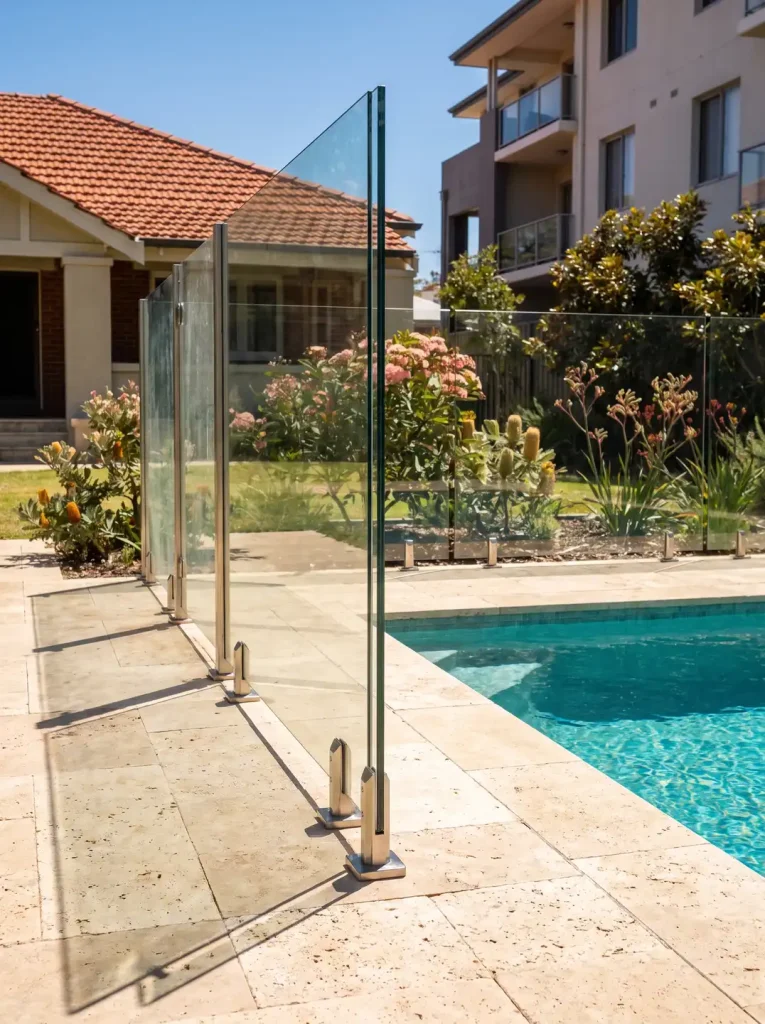
Owning a pool comes with year-round responsibilities, but a property transaction sharpens the focus on your pool barrier in a way ordinary ownership does not. If a barrier needs bringing up to standard before settlement, our pool fencing installers handle compliance work across Perth. Understanding your position early keeps a sale or lease on track.
Prefer to watch or listen?
Listen onApple Podcasts
Why a property transaction triggers pool fencing scrutiny in Perth
A pool barrier rarely gets close attention until money and contracts are involved. Selling, settling or starting a tenancy all create moments where the state of the fence, gate and surrounds suddenly matters to more than just the owner.
At settlement, a buyer and their representatives may want assurance the barrier meets requirements. At the start of a tenancy, a landlord is handing over a property that someone else will live in, often with children. In both cases an inspection or disclosure step can surface problems that were easy to overlook during everyday use.
Because these checks tie to fixed dates, a small compliance issue can become a timing problem. A loose latch or a gate that does not self-close may seem minor, yet it can stall a handover if it is not addressed in time.
Seller obligations: disclosure and a compliant barrier
When you sell a Perth property with a pool, the barrier becomes part of what you are presenting to the market. Buyers and their advisers will reasonably expect the pool area to be safe and in order, and questions about the fence often come up during the contract and settlement process.
Selling a property with a non-compliant pool area carries real risk. It can lead to last-minute negotiations, requests to fix faults before settlement, or a buyer becoming hesitant once a problem comes to light. None of these help a smooth sale.
The practical step is to make sure the barrier, gate and hardware are in good order before you list, or at least well before settlement. Dealing with this early means you control the timing rather than scrambling to fix something while the clock runs down to a settlement date.
Landlord and property manager responsibilities for rentals
Leasing a Perth property with a pool places the barrier squarely within a landlord’s duty to provide safe premises. The point of tenancy commencement is when this duty becomes most visible, because a new occupant is taking on a home they did not previously control.
Landlords generally remain responsible for the condition of the pool barrier itself. A tenant is expected to use the gate properly and not interfere with the fence, but the structural compliance of the barrier sits with the owner, not the person renting.
Property managers play a coordinating role here. They often arrange inspections, flag issues to the landlord and help ensure the barrier is sound before a new tenant moves in. Between tenancies is a natural moment to check the gate, latch and fence, since the property is vacant and any work can be done without disrupting an occupant.
Where buyers and tenants stand
If you are buying a Perth property with a pool, the barrier is something to examine before you commit. Look at the gate operation, the latch height, the condition of the fence and whether anything climbable sits against it. Raising questions during the inspection stage is far easier than discovering an issue after settlement.
For buyers, responsibility for fixing a fault usually depends on what is negotiated in the contract. Some problems get resolved by the seller before settlement, while others may transfer to the new owner. Clarifying this in writing avoids confusion later.
Tenants should check that the gate self-closes and latches properly when they inspect a rental. If something is not working, it belongs to the landlord to repair. A tenant’s responsibility is to report faults promptly and to use the barrier as intended rather than propping gates open.
Coordinating compliance work around tight timelines
Perth settlements and lease commencements often run to compressed schedules. A few weeks can pass quickly once a contract is signed, and any work on a pool barrier needs to fit within that window.
The way to stay ahead is to assess the barrier as early as possible. If you suspect the fence, gate or hardware needs attention, identifying that before a deadline gives you room to plan rather than rush. Trades and inspectors can be busy, so leaving compliance work to the final days before settlement is a gamble.
Where issues are found, addressing them promptly keeps the transaction moving. A delayed handover caused by an outstanding pool barrier problem can affect both parties and the dates everyone has built their plans around.
Practical preparation: getting the barrier transaction-ready
Preparing a pool barrier for a sale or lease starts with the basics. Walk the perimeter and check that the fence is intact, secure and free of gaps. Look for anything that has shifted, rusted or worked loose over time.
The gate deserves particular attention. Confirm it swings shut on its own, latches firmly and cannot be left ajar. Hardware such as hinges and latches wears with use, so a gate that worked when installed may not perform the same way years later.
Finally, look at the area around the barrier. Furniture, pot plants, climbable structures or overgrown landscaping near the fence can all undermine an otherwise sound barrier. Clearing these before an inspection presents the pool area in its best condition and reduces the chance of a problem being flagged. Owners who have read about the consequences of a non-compliant pool barrier will recognise why getting this right before a transaction is worth the effort.