
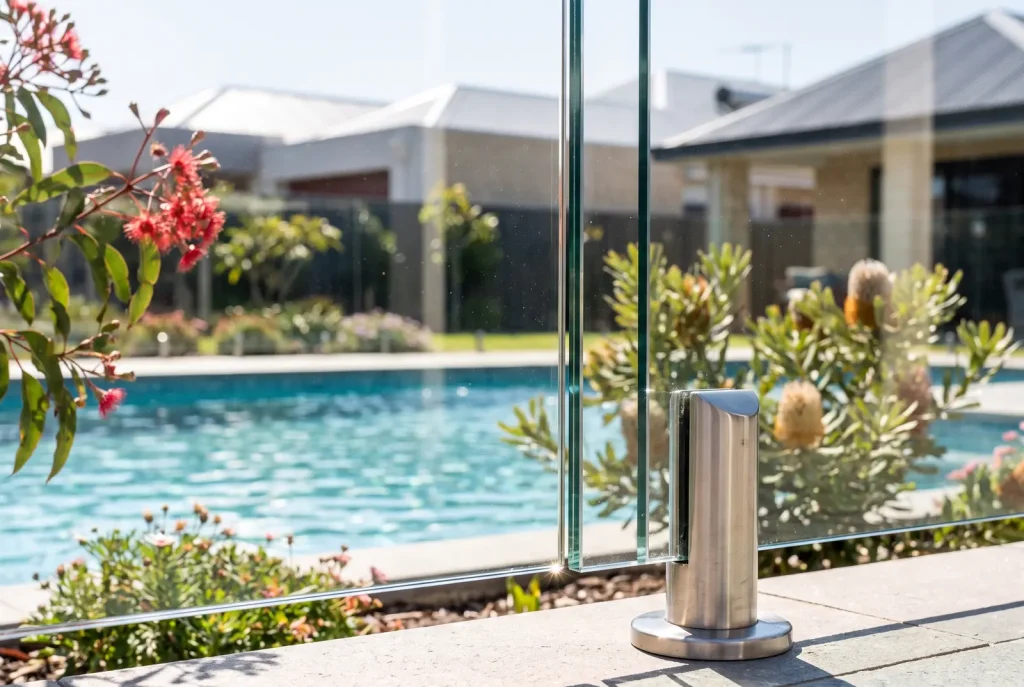
You invested in a pool and, just as importantly, in the outlook around it – the garden, the open backyard, maybe a slice of ocean or city skyline. The last thing you want is a barrier that blocks what you paid to enjoy. That is exactly why so many Perth homeowners turn to glass, and it is worth working with glass pool fencing specialists who can plan a barrier around the sightlines that matter most to you rather than treating the fence as an afterthought.
A glass fence can preserve almost any view, but only when its layout is designed with that goal in mind. Here is how to think about it before anything is installed.
Reading Your Outlook First
Before you decide on panel counts or gate positions, spend time identifying the sightlines you actually care about. Stand where you sit most often – the alfresco, the kitchen window, the main entertaining spot – and note what you look toward.
In a typical Perth backyard, three views tend to compete:
- The pool itself, seen from the house or entertaining area
- Landscaped gardens, lawn or feature planting beyond the pool
- Distant views – a coastal glimpse, treetops, or a suburban skyline
Most designs cannot perfectly frame all three, so decide which matters most from your key vantage points. That priority drives every layout choice that follows.
Panel Layout and Run Direction
The single biggest factor in how open a glass fence feels is how many interruptions your eye meets across it. Every join between panels, and every post or spigot, creates a small visual break. Reduce those breaks and the barrier starts to disappear.
Long, uninterrupted runs of glass read as one clean plane rather than a series of framed sections. Where the design allows, aligning the fence so its longest run sits across your primary sightline keeps that view smooth and open.
Frameless panels supported by discreet fixings help here, and the choice of fixing plays a supporting role too. If you are weighing how the base hardware looks, our earlier look at the different spigot styles available for glass fences covers how the hardware sits within the overall design.
Positioning the Fence Line for Transparency
Where you place the fence line changes how much of the backyard reads as one continuous space. Pushing the barrier closer to the pool’s edge can open up more of the surrounding garden and lawn, letting the eye travel further before it meets glass.
That said, positioning is not unlimited. Western Australian pool barrier rules set clear requirements around non-climbable zones, gaps beneath and between panels, and clearances from objects a child could use to climb. A fence can only sit where those rules allow, so the goal is to find the most open compliant line – not to bend the rules for a better view.
A specialist familiar with WA requirements can map out where the barrier is permitted, then work within that envelope to maximise transparency.
Where the Gate Goes
Gates carry the most visible hardware in any glass fence – hinges, a latch and often a slightly different framing. Placed in the middle of a prime view, that hardware draws the eye and interrupts the clean line you worked to create.
The simple fix is to position the gate off to one side, away from your main sightline, ideally where a path or planting naturally leads to it. This keeps entry convenient while keeping the hardware out of the most-viewed section of the fence. Thoughtful gate placement often does more for a clean look than any other single decision.
Working With Perth Light and Setting
Glass responds to light, and Perth delivers plenty of it. The orientation of your fence affects how open it feels through the day. A panel facing hard into the low morning or late-afternoon sun can catch glare and reflections, momentarily reading as a bright surface rather than a clear one.
Considering sun angles during planning helps. Where possible, orienting runs so they are not constantly fighting direct low sun keeps the glass reading as transparent for more of the day. Reflections are rarely a constant problem, but understanding when and where they appear lets you plan the layout around them.
Coordinating With Landscaping and Paving
A glass fence looks best when it feels like part of the outdoor design rather than a bolt-on safety measure. Coordinating the fence line with paving joints, pool coping and garden edges helps the glass sit naturally within the space.
Aligning the base of the fence with a change in paving or a landscaped border, for example, gives the eye a logical line to follow. When the fence, the coping and the surrounding hardscape all relate to each other, the barrier reads as a considered element of the backyard – not an interruption in it.
A well-positioned clear-glass fence can vanish into your outlook while keeping the pool safe and compliant. Even then, one design question remains about the glass itself. Some homeowners want complete transparency, while others weigh privacy near a boundary, softening harsh reflections, or a more muted look. That leaves a decision worth exploring – whether alternative glass finishes and treatments suit your setting better than fully clear panels.