
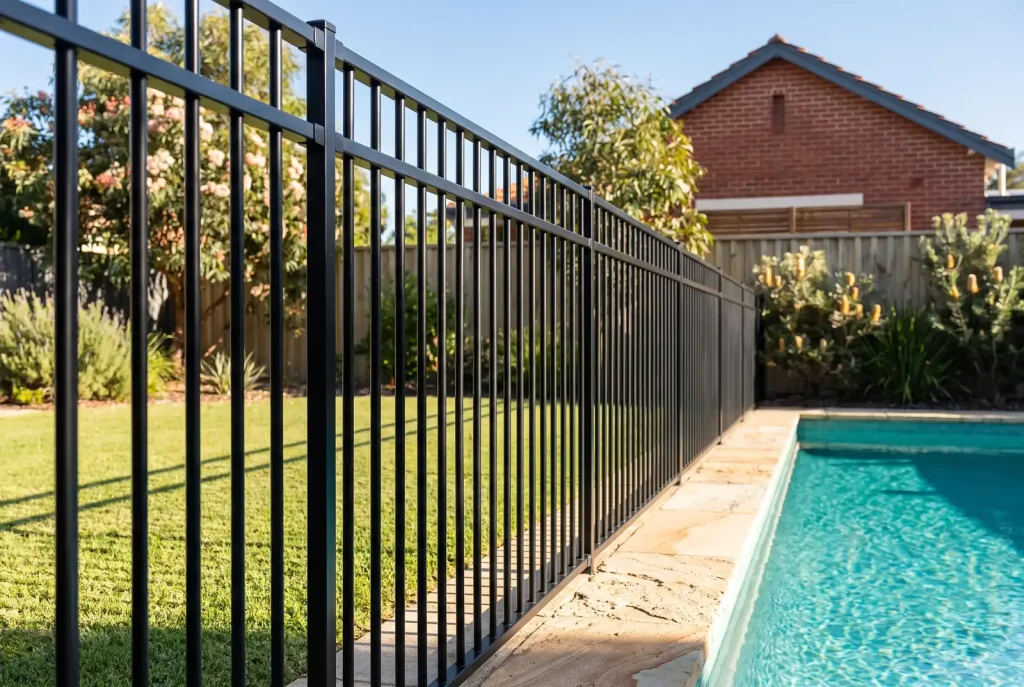
Most people judge a pool fence by what they can see – the panels, the glass, the finish on the posts. What holds it all steady sits out of sight, below the surface. When you weigh up a new pool fence installation, the decision really starts with the ground it will stand on, because Perth’s sandy soils behave very differently from the clay or loam found in other parts of the country.
Prefer to watch or listen?
Listen onApple Podcasts
Why Perth’s Sandy Soils Challenge Fence Stability
Much of the Perth metro area sits on sandy, free-draining soil, especially closer to the coast. Sand does not grip a post the way denser soils do. It shifts, drains rapidly after rain, and loses cohesion when it dries out.
Clay and loam tend to compact around a footing and hold it firm. Sand, by contrast, can move around a post over time – particularly under load, during heavy downpours, or as the water table rises and falls seasonally. That constant movement is what slowly works a poorly installed fence loose.
The result is that a fence which looked perfectly plumb on the day it went in can gradually drift out of position months or years later, without any obvious single cause.
How Footings and Foundations Keep a Fence Secure
A pool fence is only as stable as its footings. Three factors do most of the work of keeping the fence upright and secure in sandy ground:
- Footing depth – posts need to reach well below the loose surface layer so the fence anchors into more stable, compacted material below.
- Concrete footings – a properly sized concrete surround spreads the load and gives the sand something firm to bear against, resisting side-to-side movement.
- Post anchoring – how the post connects to and sits within that footing determines whether it stays rigid under wind load and everyday knocks.
Get these right and the fence resists the small, repeated forces that sandy soil allows. Get them wrong – shallow holes, undersized footings, or poor compaction – and the sand simply lets the posts wander.
Signs Your Fence Foundations Are Moving
Foundation movement rarely announces itself loudly. It creeps in. Knowing the early signs lets you act before the problem grows:
- Posts that lean slightly, or that no longer line up with each other along the run.
- Gaps opening up at the gate that were not there before, or a gate that suddenly drags or sticks.
- Panels shifting out of alignment, with uneven spacing appearing between sections.
- A post that feels loose or has any give when you push it firmly by hand.
Any one of these is worth a closer look. In sandy soil, a small lean today often becomes a serious misalignment later.
Why Footing Failure Is a Safety Issue, Not Just Cosmetic
A leaning fence can look untidy, but the real concern is compliance and child safety. Pool fencing in Western Australia must meet strict requirements for gap sizes, gate self-closing and self-latching, and overall height.
When footings shift, those tolerances can quietly slip out of range. A gate that no longer latches reliably, or a widening gap where a post has drifted, can turn a compliant fence into one that fails inspection – and, more importantly, one that a young child could get through.
That is why foundation movement should never be dismissed as merely a visual flaw. It goes to the core of what the fence is there to do.
Choosing Materials and Installation to Suit Sandy Ground
Both glass and aluminium fencing can perform well in sandy conditions, but each places its own demands on the footings. Frameless glass panels are heavier and rely on securely anchored spigots or base fixings, so the footings must handle real weight and leverage. Aluminium is lighter, yet its posts still need solid embedment to resist wind load and stay plumb.
Whichever style you prefer, the footing design should be matched to the material and to the specific soil on your block. Managing the wider Perth climate matters too – it is worth understanding how sun and heat affect your fence above ground alongside what is happening below it.
Proper site preparation makes the difference. That means clearing loose fill, digging footings to a suitable depth, compacting the base, sizing the concrete correctly, and setting each post plumb before the concrete cures. Professional installation on sandy ground is less about speed and more about getting the below-ground work right the first time.
Keeping a Well-Founded Fence Stable Over Time
Even a fence installed on sound footings needs ongoing attention. Soil movement and gradual settling develop slowly, often over several seasons, and they rarely show up until something has already shifted. A footing that has held firm for years can begin to move after an unusually wet winter or a long dry spell.
That is why regular checks matter. Testing posts for movement, watching for gaps at the gate, and confirming the fence still lines up – done consistently through the year – helps you catch a loosening post or a misaligned latch before it becomes a compliance problem. Building these checks into a structured, season-by-season inspection routine is the surest way to keep your fence secure and compliant for the long haul.